Operative
Computational Neurosurgery
Bringing computation into the operating theatre.
Overview
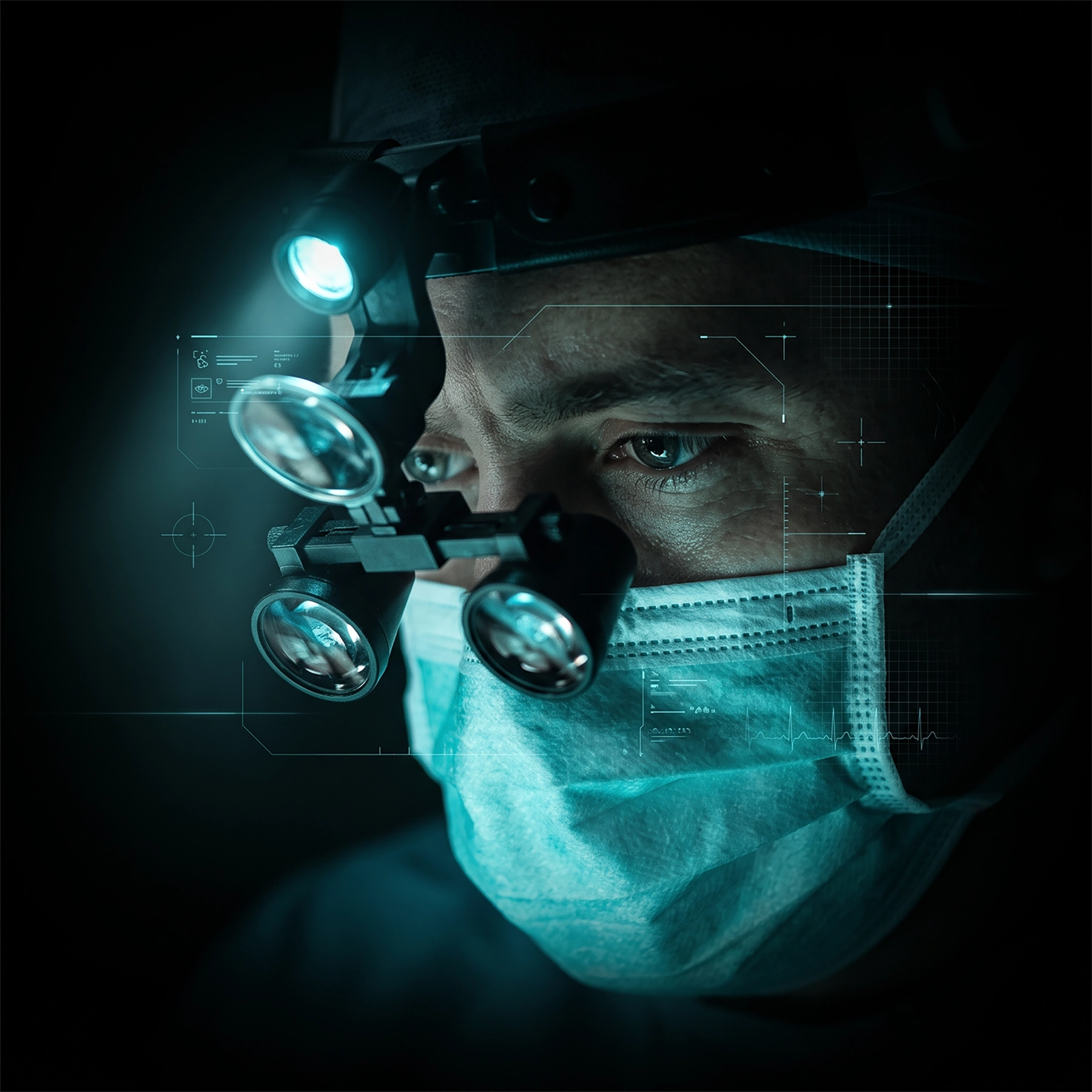
Computational Neurosurgery is the founding vision of the lab, the first of its kind in Australia, and it sits at the point where computational science meets the operating theatre. We develop tools that help neurosurgeons see more, plan better and operate more safely, translating data and algorithms into decisions made at the bedside and on the table. Our work spans intraoperative guidance, including fluorescence-guided resection; physics-based and computational planning of surgical corridors that minimise disruption to eloquent tissue; and connectomics approaches that map the brain's networks to inform pre- and intra-operative decisions. Across these, the goal is the same: to reduce risk and improve outcomes by giving surgeons quantitative, patient-specific information. The lab also leads on the responsible foundations of this field. As corresponding contributors to the Declaration of Sydney, a framework for the ethical use of AI in neurosurgery, we work to ensure that computational neurosurgery advances safely, transparently and in the patient's interest.
Methods
Techniques & approaches
The computational methods that underpin this research area
Radiomics
Publications
Selected publications in this area

Journal article
2024
Adaptive Clustering for EGFR Amplification Prediction in Glioblastoma: A Variational Autoencoder-Dirichlet Bayesian Gaussian Approach
Danaei Mehr H., Cong C., Noorani I., Di Ieva A., Liu S.
Pain Practice

Book chapter
2024
Computational neurosurgery: Foundation
Di Ieva A., Suero Molina E., Liu S., Russo C.
Computational neurosurgery
Review
2024
Cortical and Subcortical Stimulation for Pain: Network Mechanisms and Therapeutic Implications
George Rudd, Antonio Di Ieva
Neuroscientist
Book chapter
2024
Neurosurgery, explainable AI, and legal liability
Matulionyte R., Suero Molina E., Di Ieva A.
Computational neurosurgery
Funding
Selected funding in this area
Grants supporting our computational neuroimaging research programme
NHMRC
Computational modelling of aneurysm rupture
$724,101
Project Grant
Abbott; B Braun
CNS Lab Computational Neurosurgery Fellowship
$600,000
Industry sponsorship
Industry sponsors
1st World Conference of Computational Neurosurgery (WCCNS)
$260,000
Conference sponsorship
RACS
John Mitchell Crouch Fellowship: founding the CNS Lab
$150,000
John Mitchell Crouch Fellowship
Browse publications.
Join our work.
Explore the full body of CNS Lab research or contact us to discuss collaboration opportunities.