Structural
Computational Neurobiology & Neuroanatomy
Mapping the brain's architecture, from vessels to networks.
Overview
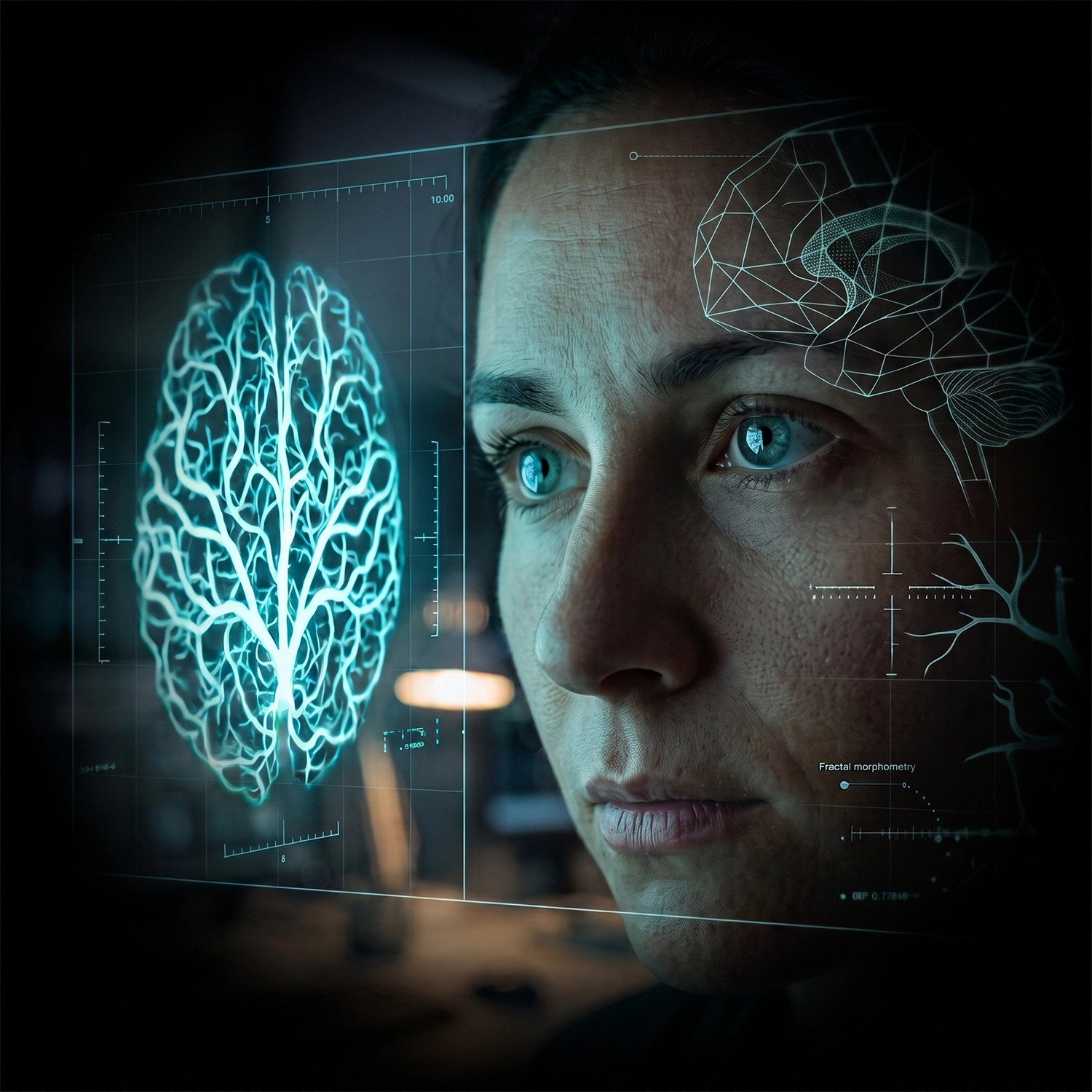
Computational Neurobiology & Neuroanatomy applies the lab's quantitative methods to the fundamental structure and biology of the brain. Here the focus shifts from diagnosis and surgery to understanding: how the brain is built, how its architecture varies, and how structural and molecular changes underlie disease. Our work includes computational neuroanatomy and the analysis of microvascular networks, often through the lens of fractal and geometric complexity, as well as collaborations that reach into molecular and cellular biology, from tumour modelling to protein interactions and tissue engineering. By quantifying the brain's form across scales, we build the structural foundation on which functional and clinical interpretation rests. This domain is deliberately collaborative and cross-disciplinary, connecting the lab's computational strengths with experimental neurobiology at Macquarie University and partner institutions.
Methods
Techniques & approaches
The computational methods that underpin this research area
Radiomics
Publications
Selected publications in this area

Book chapter
2024
Computational Pipelines for Protein Ubiquitylation Analysis and Prediction
Potapenko, A., Henden, L., Azemi, G., Di Ieva, A., Laird, A.S., Chung, R., Lee, A. and Davidson, J.M.
Protein Post-Translational Modifications (Methods in Molecular Biology, vol. 3018)

Journal article
2024
Distinctive features of the tumor and immune microenvironment in glioblastoma
Shklovskaya, E., Pedersen, B., Lim, S.Y., Irvine, M., Brown, J.R., Pinho, A.V., Shivalingam, B., Menzies, A.M., Satgunaseelan, L., Alexander, K.L. and Di Ieva, A.
NPJ Precision Oncology
Funding
Selected funding in this area
Grants supporting our computational neuroimaging research programme
Multiple industry sponsors
Brain Anatomy & White Matter dissection workshops
$200,000
Industry sponsorship
MND Research Australia
Characterising the interactome of sequestosome-1 (p62)
$100,000
Innovator Grant
Macquarie University
The elephant in the room: overlooked molecules in systems biology
$50,000
BioInnoMQ
Macquarie University
A magnetic multi-tool: pulsed magnetic fields for brain repair
$49,932
Research Fellowship Grant
Browse publications.
Join our work.
Explore the full body of CNS Lab research or contact us to discuss collaboration opportunities.